Designing a compact brewing area takes careful planning. In modern Sprinter 2024 builds, maintaining the main kitchen utility is essential. Professional builders like Sportsmobile advise using corners to free up central workspace.
Smart layouts fit a compact espresso setup beside a 24-inch counter without trimming cooking function. This keeps meal prep comfortable and efficient for travelers in the United States.
Efficient choices—slide-out trays, wall mounts, and stacked storage—make the interior versatile. Owners can enjoy quick access to their morning brew while keeping pots, pans, and prep zones intact.
These strategies preserve countertop width and boost usability. The goal is a balanced interior that supports both gourmet cooking and fast beverage service.
Key takeaways: Use corner space, preserve 24-inch counters, integrate compact brewing, and choose flexible storage to keep the kitchen fully functional.
Assessing Available Space in Your Camper Van
Begin by measuring the full kitchen footprint to spot where a compact brew setup can fit without crowding the cooktop.
For many builds, the typical 15-square-foot kitchen area in a Ford Transit defines the limits. Professionals in the 2023 food truck market stress that a clear spatial audit is the first step in an efficient layout.
Plan with real numbers: map counters, clearances, and appliance depths. Compare that map to how a dedicated coffee truck business lays out a 60-square-foot interior to maximize workflow.
Use a structured checklist to avoid surprises. A free pdf checklist helps record appliance dimensions, door swings, and service paths. This reduces bottlenecks and supports new business success.
- Measure counters and stoves, then mark safe clearance zones.
- Note power and water access for equipment placement.
- Test mock layouts to validate flow before final installs.
Outcome: a documented plan that aligns with a shop business plan or opening coffee shop checklist will set new operators up for smoother operations and easier scaling.
Creative Camper Van Coffee Station Ideas for Small Kitchens
Smart vertical solutions reclaim limited counter space and keep workflow smooth in tight kitchen layouts. Small mobile builds benefit when shelving and mounts move storage up and out of the work zone.
Wall-Mounted Racks
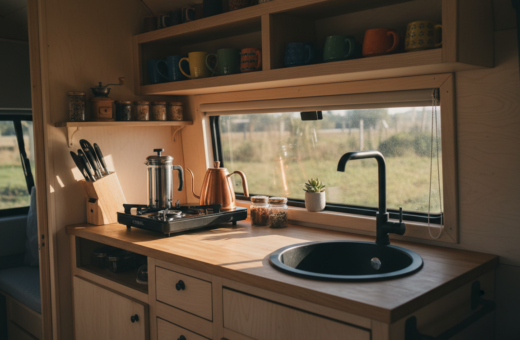
Wall-mounted racks store mugs and tools vertically to free counters. This approach mirrors high-end mobile coffee truck design from recent professional builds.
Install secure brackets at eye level and add removable hooks for flexibility. Many outfitters, including VanLife Customs, recommend vertical organization as the most efficient layout strategy.
- Store mugs on stacked racks to reduce breakage.
- Use shallow shelves for grinders and tampers.
- Keep frequently used items within arm’s reach.
Magnetic Strip Organization
Magnetic strips hold metal accessories firmly during transit. They prevent movement on rough roads and keep the prep area tidy when service speeds matter.
Combine strips with racks to clear the counter for brewing and prep. This combination of concepts often combine to support a streamlined opening coffee shop workflow.
- Mount strips near the brewing zone for quick access.
- Label spots so staff can restock quickly.
- Reference your shop business plan and a free pdf checklist to ensure layout meets operational needs.
Outcome: a thoughtful mix of racks and magnetic storage will set new business owners up for new business success while keeping counters clear for real service demands.
Selecting Compact Brewing Equipment
Prioritizing lightweight, multi-use equipment lets operators keep flow and power budgets tight. A manual brewer such as an AeroPress weighs under one pound and produces consistent results with minimal energy needs. This choice supports a lean, reliable coffee truck concept for busy routes.
Many owners favor manual brewing to conserve battery life and lower generator load. Choosing gear with low power draw helps the food truck POS stay powered and reachable during peak service.
Pick tools that pull double duty: a compact grinder with variable settings or a stout stainless server can serve prep and service needs. Multi-functional equipment reduces clutter and keeps the shop business plan practical.
“Small gear and smart layout will set new standards for efficiency and new business success.”
- Weigh gear before buying to keep payload low.
- Review power draw specs to match onboard capacity.
- Include items listed on your free pdf checklist when finalizing purchases.
Vertical Storage Solutions for Coffee Essentials
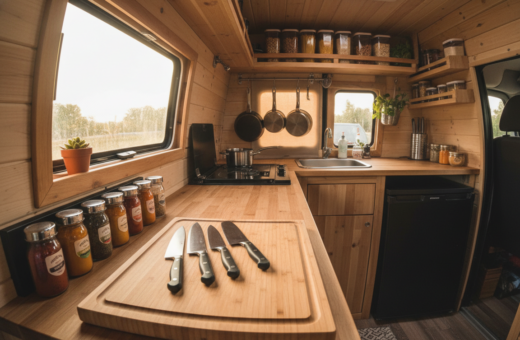
Overhead storage transforms unused upper walls into organized zones for beans, filters, and small gear. This approach preserves the 20-inch stove workspace and keeps prep areas clear.
Utilizing overhead cabinets is a hallmark of the best coffee truck design. Cabinets with adjustable shelves and clear, airtight containers help teams track inventory and reduce waste.
Practical cabinet setup
- Place bulk supplies high: beans and backup filters stay out of the way but remain reachable.
- Use labeled containers: clear jars speed inventory checks and match a free pdf checklist for opening food truck planning.
- Secure doors and latches: professional mobile coffee truck builds use strong closures to prevent spills in transit.
- Plan around workflow: integrate the cabinet layout into the shop business plan and food truck pos flow.
When owners apply these truck ideas concepts, they’ll set new operational standards. This simple upgrade supports new business success and complements a larger coffee truck business or coffee shop business strategy.
Integrating Foldable Surfaces for Extra Prep Room
Foldable surfaces transform tight prep zones into functional work areas in seconds. They add flexible space without compromising the main counter or cooking line.
Drop-Leaf Tables
Installing a drop-leaf table adds about 12 inches of extra prep space. That gain is vital when opening food truck style operations in a compact footprint.
Tip: Mount the hinge low so the leaf folds flat against the cabinet for safe transit.
Sliding Counter Extensions
Sliding extensions offer instant workspace that tucks away when not needed. Many professional coffee truck design experts recommend this for maximum utility.
When concepts often combine—like an extension with under-shelf storage—teams gain both surface and accessible gear without crowding the prep zone.
Hidden Pull-Out Trays
Hidden pull-out trays keep bulkier tools, like a grinder, tucked out of sight. They support quick setup and help the operator maintain a clean area during peak service.
“you’ll set new recipes faster with a hidden tray that stores gear within reach.”
- Drop-leaf: +12 inches of prep surface.
- Sliding: instant expansion, recommended by best coffee truck designers.
- Pull-out: secures equipment and speeds workflow — checklistso many things are easier to manage.
Integrating these foldable solutions helps a mobile coffee truck concept perform like a larger kitchen. They support a shop business plan and improve chances for new business success when opening coffee shop or opening food truck operations.
Managing Power Requirements for Brewing
A robust battery and inverter setup ensures steady temperatures and uninterrupted service.
Most high-end espresso machines require at least 1,500 watts. This demand means operators should specify a heavy-duty inverter and shore or generator backup when designing a mobile setup.
When planning a coffee truck concept or listing equipment for a new route, confirm the inverter handles surge current. Pumps and boilers draw short bursts that can trip undersized systems.
Professional builders often recommend a 200Ah lithium battery bank to cover repeated pulls and keep voltages stable. Matched with a quality inverter, this combo supports consistent brew temps and protects electronics.
- Verify wattage: add machine startup surge to continuous draw.
- Size the inverter: choose one rated above peak surge.
- Plan for backups: include generator or shore power options.
“Careful power calculations prevent the common pitfalls that plague new mobile business owners during year one.”
Integrating these steps into a coffee truck business plan reduces downtime and keeps service smooth while operators test truck ideas concepts on the road.
Organizing Your Coffee Supplies Efficiently
Organizing gear by frequency of use cuts prep time and keeps counters clear during busy shifts. Group daily beans in a 1-liter canister near the brewing area so the freshest batch is within reach.
Reserve a dedicated drawer for grinders, tampers, and disposable cups. This keeps surfaces free and lets staff set up quickly between services.
Use modular dividers inside drawers and cabinets. They stop small items from shifting while the vehicle moves and make restocking predictable.
- Pack by frequency: daily, weekly, backup.
- Dedicated drawer: one place for tools and disposables.
- Modular dividers: secure items in transit.
- Label with dates: rotate stock for peak freshness.
Labeling containers with purchase dates protects flavor and reduces waste. Clear labels also speed inventory checks and make forecasting easier for long routes.
Efficient organization lets the operator focus on brew quality instead of searching for tools. For practical startup lessons, see this short read on mobile cart setup: mobile cart tips.
Maintaining a Clean and Functional Workspace
A disciplined cleanup routine keeps the prep area safe and tasting great between service runs. Wiping surfaces immediately after use prevents coffee oils from bonding to countertops and hardware. Those oils become harder to remove the longer they sit.
They should keep a compact, 5-inch handheld vacuum on hand for quick removal of stray grounds. A short sweep after each shift keeps drawers and floors tidy and presents a professional workspace.
Regular maintenance of brewing equipment, as recommended by makers like Breville, preserves flavor and reduces repair needs. Descale schedules, gasket checks, and filter changes all extend machine life.
Safety matters: working with hot water in a confined space raises burn risks. Clean surfaces reduce slips and limit cross-contamination during busy periods.
“Establishing a short daily cleaning routine makes service smoother and keeps the kitchen functional.”
- Wipe oils after each use.
- Vacuum grounds with a small handheld tool.
- Follow manufacturer maintenance schedules.
- Keep a short daily checklist for consistent results.
Incorporating Aesthetic Elements into Your Design
Decor choices that reflect a clear brand story invite guests to linger and post photos. This helps build a strong social media presence and makes it easy for customers share photos of the setup.
Adding a personal touch like a signature latte art concept or a nitro cold brew display creates a standout coffee truck offer. These elements often combine multiple visual cues to attract new visitors.
Using a business plan template helps the owner plan and organizes vision. A clear plan ties aesthetics to service and to practical items on a food truck checklistso.
Warm lighting, branded cups, and a simple loyalty program encourage repeat visits. For example, a “win free drink” card or app reward can boost engagement.
- Create restaurant brand elements that are visible in photos.
- Use a guide restaurant brandinguse to match look and workflow.
- Make non-alcoholic coffee cocktails and nitro displays part of the menu story.
“A cohesive look turns service into a shareable moment that fuels growth for a mobile coffee business.”
Enhancing Your Mobile Coffee Experience
A concise, photo-ready menu helps teams attract customers who then share photos online.
Offer a few non-alcoholic coffee cocktails and a nitro cold brew variant to broaden appeal at events. These items often combine multiple trends and draw evening crowds.
Use an excel spreadsheet editable sheet to track inventory and costs. A simple file makes forecasting and ordering faster for types food trucks that rotate menus.
- Research compare point sale options and use a pos comparison toola to pick the best fit.
- Apply a business plan template that organizes vision helps secure partners or raise funding coffee when needed.
- Launch a digital program encourage repeat customers — a “win free drink” reward accelerates loyalty.
Visuals matter: a consistent latte art concept and clear create restaurant brand cues improve social media presence and motivate customers to share photos.
“Simple menu experiments and the right tech make a mobile coffee business easier to scale.”
Leveraging Technology for Business Management
A single dashboard that links POS, inventory, and accounting saves hours each week. Operators can monitor sales, track stock, and manage taxes from one place to reduce errors and free time.
Choosing the right tools matters. Owners should use a pos comparison toola to compare point sale systems one by one. This helps when setting coffee truck locations or when they open coffee truck sites in new cities.
Keep an excel spreadsheet editable for backups and daily reconciliations. Combine that with a coffee shop checklistso and a food truck checklistso to cover permits, supplies, and equipment checks.
- Research compare point options before signing contracts.
- Use mobile-friendly accounting to scale a mobile coffee business.
- Link POS to loyalty tech and a program encourage repeat visits.
For funding and growth, a clear business plan template that organizes vision helps when owners need to raise funding coffee. Technology also boosts social media presence so customers share photos of a latte art concept and a standout coffee truck offer.
“Smart tech stacks let operators control ops, serve faster, and build a brand that customers will share.”
Developing a Strong Brand Identity
A memorable brand ties visual identity to a clear service promise that customers recognize instantly.
Consistent logo and color choices make the operation stand out among other food trucks and street vendors. A simple palette and a clean mark speed recognition in photos and at events.
Consistency matters online and on-site. Use the same imagery, tone, and menu names across social channels and physical signage to build trust and repeat visits.
Define what makes the menu unique: sourcing practices, a signature brewing method, or a sustainability focus. These choices become core messages in marketing and staff training.
Engage the local community through pop-ups, charity partnerships, and farmer’s market days. Those events create word-of-mouth and show reliability.
“Your brand is more than a logo; it is the full experience from the first sip to the final interaction.”
- Be consistent: use the same visual language everywhere.
- Be authentic: highlight sourcing and process.
- Be present: join local events to build reputation.
Planning for Long Term Success
A lasting mobile business balances consistent service with deliberate upgrades and supplier partnerships.
Commit to continuous improvement. Regularly update the menu and perform scheduled equipment upgrades to meet changing customer demand. Small, planned changes reduce downtime and keep the offering fresh.
Financial readiness matters: set aside a repair and upgrade fund. Treat that reserve as an operational line item so repairs don’t stall service or growth.
Build strong supplier relationships and network with other mobile operators. Those connections provide access to parts, bulk pricing, and practical advice when problems arise.
- Monitor industry trends like specialty brewing to adapt the menu.
- Track costs and upgrade cycles in a simple budget sheet.
- Prioritize quality, consistency, and friendly customer service every day.
“Focus on reliability and steady improvement to create a sustainable business that serves the community for years.”
Conclusion
With focused planning, a compact brew area boosts convenience without shrinking the main work zone.
Use vertical storage, foldable surfaces, and small, multi‑use equipment to preserve counter space and workflow. These choices keep the kitchen efficient and pleasant to use.
Organization and cleanliness are essential: labeled containers, daily wipe routines, and secured shelving reduce waste and speed service. Technology and a clear brand identity amplify reach and make operations scalable.
Whether outfitting a van for weekend trips or launching a small mobile business in the United States, these strategies help maintain great taste and full kitchen function on the road.