Many people who embrace van life need gear that saves power and space without sacrificing comfort. This introduction highlights compact items that keep food fresh and cooking simple while on the road.
The GE double-door fridge is a strong option for limited storage. It pairs a freezer and fresh food compartment in a compact style that fits small interiors.
A Fisher & Paykel induction cooktop and a GE mechanical air fry 7-in-1 toaster oven offer versatile cooking choices. They give efficient heating and multiple meal options without using too much battery time.
Van Vreedes serves customers in Appleton, Green Bay, and Oshkosh to help pick the right setup. Proper cleaning and water care, such as running vinegar through a coffee machine, keep systems reliable on long trips.
In short: choosing the right refrigerator, cooktop, and small kitchen units makes life on the road more practical and enjoyable.
Understanding Your Power Needs for Van Life
A clear power budget keeps a camper van’s systems reliable and light. Start by listing every electrical device and its draw. This simple step makes sizing batteries and panels straightforward.
Calculating daily watt-hours
- The Dometic CFX5 75DZ fridge draws about 1.29Ah per hour, roughly 31Ah each day.
- A MaxxAir 7500K fan at medium uses 2.5Ah per hour, about 60Ah per day.
- Multiply each item’s amp draw by hours of use to get daily totals; a typical setup above uses ~98Ah daily.
Battery capacity basics
Lead-acid batteries provide about 50% usable capacity. Lithium batteries deliver near 100% usable energy. This affects how many batteries are needed and adds weight considerations to the build.
As a rule, a 200W solar panel array can produce ~800Wh (about 66Ah). Monitoring daily energy use helps right-size the battery bank and panels so essential appliances run through the day without shore power.
Selecting the Best Appliances for Off Grid Van Living
A smart kitchen plan balances storage, weight, and battery demand to keep life on the road smooth. Many people start by matching their fridge and power setup to daily needs.
The Base 12V Electrical System from Adventure Wagon offers 200Ah of lithium capacity. This provides ample power to run a compressor fridge and basic cooking gear without constant charging.
When choosing a fridge, note that three-way absorption models run on propane and need the van to be level. Compressor refrigerators are a better option for most builds because they run efficiently on DC, AC, or solar power and handle movement on the road.
“Choose a compressor unit when mobility and energy efficiency matter most.”
A compact, well-designed galley keeps sink, stove, and fridge within reach and makes cooking meals easier. Consider weight and durable countertop materials so the setup survives rough roads.
- Select gear that fits the storage and power limits of the camper van.
- Prioritize a reliable compressor fridge for steady food storage on the move.
- Plan the galley layout to maximize space and simplify daily cooking.
Optimizing Refrigeration for Energy Efficiency
A refrigerator’s design and siting can make the largest difference in daily energy use. Small choices about style and placement lower run time and reduce draw on solar panels and battery systems.
Compressor Fridge Benefits
Compressor units typically pull between 1 and 3 amps per hour. That makes them the most efficient way to keep food cold in a camper van setup.
They cycle on and off, so they use less power over time than systems that run continuously.
Top Loading vs Upright Models
Top-loading chest fridges are often more energy efficient and durable. They keep cold air contained when opened.
Upright models like the Isotherm Cruise Elegance 85 save floor space and offer easier organization. The 85‑liter refrigerator holds about a week of food for two people, though upright freezers may need more frequent defrosting.
Ventilation Requirements
Make sure there is clear ventilation on the top and sides of the unit. Proper airflow prevents overheating, which lowers efficiency and shortens run time.
- Optimize placement: allow at least the manufacturer’s recommended clearance.
- Service tip: defrost the freezer every two months to maintain efficiency.
- Solar ready: use solar panels sized to sustain the compressor fridge for several days away from shore power.
For a deeper look at low-draw refrigeration options, see the low-energy fridge guide.
Choosing Between Induction and Propane Cooking
Picking a cooking method hinges on energy limits, space, and safety priorities in a camper kitchen.
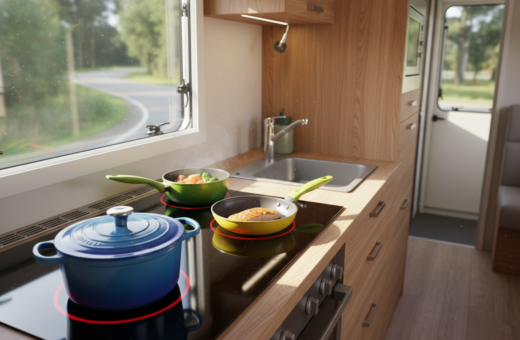
Induction stoves are safer for indoor cooking because they do not burn gas inside the vehicle. A one-burner induction unit is ideal for quick coffee and simple meals, but it will draw a lot of power. That makes battery capacity and inverter size the key factors when selecting this option.
Portable propane stoves give flexible cooking options. People can cook outside when the weather is nice and move indoors when it rains. Fixed propane setups feel more like home but take up counter space and need cleaning.
Safety Considerations for Indoor Cooking
Ventilation is essential. When using gas inside, make sure to crack windows and run a fan to avoid carbon monoxide buildup. Keep water and food clear of open flames to prevent accidents in tight quarters.
“Choose the cooking method that matches your energy limits and safety needs.”
- Match the stove type to the battery and energy setup.
- Use induction if the electrical system can handle the draw.
- Use propane with proper ventilation and routine checks.
Essential Small Appliances for Compact Kitchens
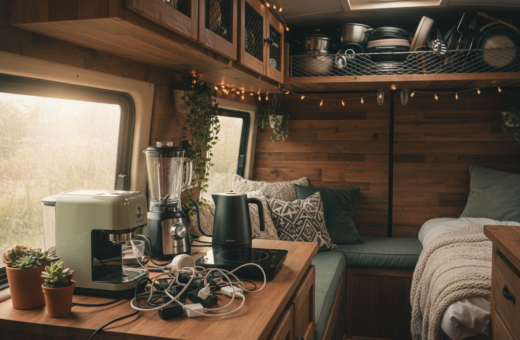
Smart, compact gear lets travelers prepare fresh meals without hogging storage. A compact blender handles smoothies, sauces, and soups. It packs away easily and saves time when food prep is short.
The GE mechanical air fry 7-in-1 toaster oven gives baking, broiling, and toasting in a small footprint. A compact coffee maker delivers a reliable cup each morning without taking much counter space.
Laundry and water care matter, too. The GE space-saving portable washer is a practical option to clean clothes on the road. It reduces trips to laundromats and fits tight storage bays.
- Kitchen essentials: blender, toaster oven, and coffee maker save time and storage.
- Laundry option: a compact portable washer keeps clothes fresh with minimal water use.
- Design tip: choose multi-use items and secure them for travel to protect the refrigerator and storage areas.
With a few durable, low-draw items, the camper kitchen stays organized and functional. This approach keeps meals home-like while maximizing limited space and power use.
Managing Battery Health and Solar Integration
Keeps batteries healthy by matching panel output, charge control, and realistic daily loads. This simple approach helps the electrical system deliver consistent power to a fridge, lights, and other essentials.
Solar Panel Efficiency
High-efficiency panels change how many days a setup can stay off the grid. The Renogy 200W ShadowFlux panels use N-Type cells and ~25% efficiency to perform better in heat and degrade less over time.
Pair panels with a smart MPPT charge controller to squeeze more energy into the batteries and reduce charge time.
Managing Inverter Loads
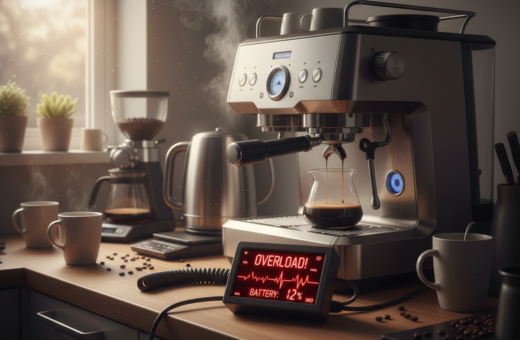
Sizing the inverter matters when using high-draw devices like induction stoves. If the inverter is too small, it will limit use. If it is too large and poorly managed, it can shorten battery life.
- Track daily energy use to see how long batteries will last.
- Make sure the inverter handles peak loads without stressing the battery bank.
- Design the system so solar panels and MPPT charging cover typical energy needs.
“Monitoring battery health and matching system components lets travelers stay off grid for many days with confidence.”
For more on configuring camper electrical systems, see camper solar systems.
Conclusion: Building a Sustainable Off Grid Kitchen
Creating a compact kitchen that uses little energy makes life on the road simpler and more enjoyable.
, A clear power plan and sensible layout let people extend their time living in a van without constant recharging.
Choose efficient refrigerators and solar-friendly systems as the primary option to protect battery life and water use. Small, reliable appliances reduce load and add comfort.
Investing in a solid electrical system and durable gear is a practical way to keep the mobile home functional for years. Simplicity and deliberate choice make van life sustainable and rewarding.