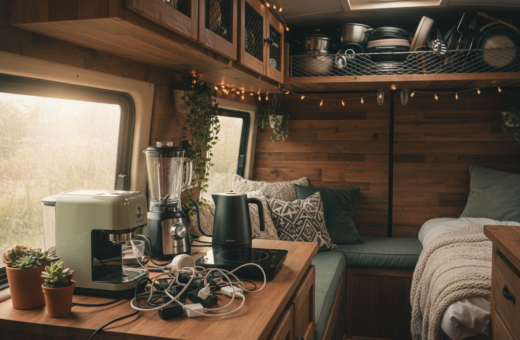
The idea drew attention when travelers tried to keep their daily coffee ritual while living on the road. Many wondered if a small, mobile setup could actually brew a reliable cup without grid hookups.
Practical tests showed the main hurdle was balancing the high power draw of an espresso device with limited output from a compact panel and battery pack. A 12V DC drip coffee maker often needed roughly a 300-watt panel to brew and keep coffee warm, so planning was essential.
Travelers who studied their maker’s wattage and matched it to a compatible generator avoided most startup issues. For technical guidance and example setups, the guide on power coffee maker with solar explained how capacity and surge ratings affected results.
In short: it was feasible with careful planning. Proper panel size, battery capacity, and knowing your appliance’s draw made daily coffee on the road a consistent highlight.
The Reality of Brewing Coffee Off-Grid
Keeping a morning ritual while living off-grid forces choices about gear and energy. Travelers quickly learn that many coffee makers draw more electricity than a small setup can sustain.
Key constraint: a commercially available 12V DC drip coffee maker typically needs about 300 watts of panel capacity to brew coffee and keep a pot warm during the day.
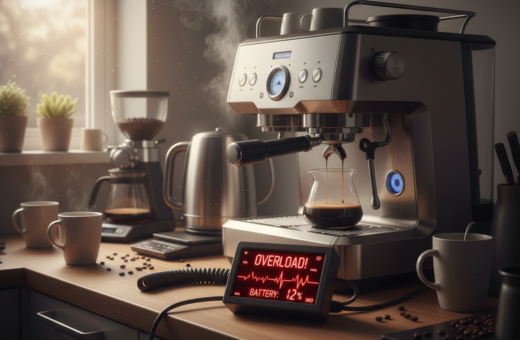
Traditional electric appliances burn a lot of power in short bursts for heating. That spike can deplete a battery bank or overwhelm a small inverter.
“Choose equipment by matching its wattage to your panels and battery; that planning makes reliable brewing possible.”
- The moka pot, invented in 1933, uses pressure and stays highly energy efficient for brewing coffee without long heating cycles.
- Many campers opt for low-draw makers or manual pots to cut electricity needs and save hours of battery run-time.
- Understanding a coffee machine’s consumption helps travelers balance heating, water volume, and available panels for consistent results.
Practical tip: read an off-grid guide like the off-grid espresso power guide to match your maker to the right panel and battery setup.
Understanding Power Consumption for Your Solar Powered Espresso Machine
A clear starting point is measuring the watts your coffee gear pulls during a brew cycle. This single number guides how large a battery and panel capacity must be to support daily use.
Factors Influencing Wattage
Every coffee maker lists a wattage rating that shows how much electricity it draws. The heating element is the main part that uses the most energy during heating and brewing.
The appliance design, water volume, and pot size change how many watt-hours are used per brew. A typical home electric coffee maker can spike near 1200 watts, so its daily load depends on brew time and repeats.
Starting vs. Running Watts
Starting watts are often higher than running watts. That brief surge can trip an undersized inverter or drain a battery bank if not planned for.
- Measure surge needs: check the rating plate or use a meter.
- Match capacity: ensure battery and inverter can handle start and steady draw.
- Monitor usage: tracking power consumption prevents surprises during a morning routine.
Evaluating Solar Generator Capacity for Coffee Makers
Estimating daily watt-hour demand clarifies whether a portable generator can handle a high-wattage coffee maker. A clear, simple calculation helps travelers plan mornings without unexpected outages.
Calculating Your Daily Watt-Hour Requirements
Start by noting the watt rating on the appliance. Multiply that number by the hours the maker runs each day to get watt-hours.
Example: a 1200W coffee machine that brews in 0.08 hours (five minutes) uses about 96 Wh per brew. Running several brews or keeping a pot warm raises total daily consumption.
The EcoFlow RIVER 2 Max stores 512Wh and can run many standard coffee makers for short bursts. High-capacity units like the M3000 extend run time significantly; one model can sustain a 1200W device for roughly one hour and forty-two minutes on a single charge.
- Check rated capacity of your generator and panels to ensure daytime recharge.
- Match surge and running watts so inverters and batteries don’t trip.
- Plan brew count to protect battery life for the rest of the day.
Proper calculation guarantees the morning coffee ritual fits your camping or travel routine without draining the battery bank.
Building a Custom Insulated Solar Coffee Maker
A custom insulated unit shows how modest panel capacity can still support a reliable morning brew. Marie Verdeil built a design that runs on a 100W panel and focuses on heat retention rather than fast heating.
Thermal Mass and Heating Elements
Embedding a moka pot into a mortar slab creates thermal mass that stores heat. That stored heat means the first pot takes about 1.25 hours, while later pots need only 20–25 minutes of sunlight to finish.
Insulation Techniques
Cork sheets wrap the thermal core to cut heat loss and reduce energy draw. This approach lowers reliance on a battery and keeps water at brewing temperature longer.
Tiling and Finishing
Tiling the exterior gives a durable, easy-to-clean finish suited to a campervan or off-grid kitchen. At roughly 10 kg, the appliance is best for a semi-permanent install where capacity and weight are manageable.
“By trading speed for thermal mass and insulation, builders can brew multiple pots with very low watt demand.”
- Low panel use: works with a 100W panel.
- Efficient cycles: first brew ~75 minutes; repeats 20–25 minutes.
- Stable design: cork insulation and tiled finish for mobile home kitchens.
Essential Components for Your Solar Setup
A compact, reliable setup starts with the right mix of panels, storage, and wiring. High-quality solar panels that charge a battery bank during daylight are the first priority for any mobile coffee maker.
Select a portable generator or power station whose capacity covers both running and surge watts of the coffee machine. Matching surge ratings prevents trips and protects the appliance.
- Battery capacity: size it to store enough energy for cloudy mornings and multiple brews.
- Wiring: use heat-resistant, correct-gauge cables for safety and minimal loss.
- Outlets and connectors: many campers prefer a generator with multiple AC outlets for easy appliance hookup while camping.
Durable panels and solid component choice ensure the coffee maker stays functional in remote locations. Thoughtful design and the right capacity make the setup last through years of travel.
Tips for Efficient Brewing While Traveling
A few simple adjustments to placement and timing greatly improved daily brewing for people living mobile. These steps help protect battery capacity and cut power consumption when making coffee on the road.
Optimizing Sunlight and Panel Placement
Park for direct sunlight: position the vehicle so panels get unobstructed sun through the morning. That boosts panel output and reduces load on the battery.
Brew during peak hours: aim to brew coffee near midday when sunlight is strongest. This lowers strain on the battery and shortens the time appliances need to run.
Small batches win: with a drip coffee maker, brew smaller pots. Heating less water cuts watts and saves battery life for other appliances later in the day.
- Keep panels clean to maintain rated capacity.
- Use the right water amount to avoid wasting energy on extra heating.
- Plan brew count and timing to match panel output and battery state.
Following these tips gives a consistent coffee experience while keeping energy use balanced in a mobile home or campsite.
Conclusion
A careful balance of battery size, panel output, and appliance rating turns a mobile setup into a dependable coffee source.
They found that choosing the right coffee maker and checking its watts and surge rating solved most problems. Proper capacity planning for batteries and panels keeps the morning routine steady.
Energy-efficient choices matter: a custom insulated pot or a low-draw coffee maker cuts heating time and saves electricity. Matching capacity to use prevents trips and extends run time during travel.
With thoughtful planning, travelers can enjoy home-style coffee anywhere. Verify ratings and size before installing, and the result is reliable, cafe-quality coffee on the road.