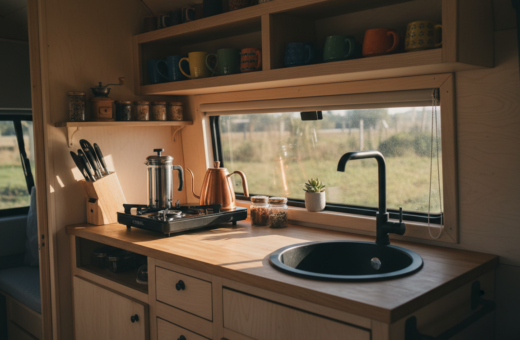
Maintaining a tidy coffee station is key to stress-free travel. For those living the van life, small decisions about materials and layout make mornings simpler. Thoughtful planning keeps gear secure and surfaces quick to wipe down.
Choosing the right finishes ensures a surface resists stains and handles spills during long drives. Durable countertops and splashproof trays reduce maintenance and extend the life of brewing gear. This saves time and keeps the setup looking professional.
Organization matters as much as material choice. Smart racks, labeled containers, and a dedicated drip zone prevent clutter. With these measures, travelers can enjoy their morning coffee while staying focused on the scenery.
Pro tip: prioritize nonporous surfaces and simple storage to keep routines fast and reliable on the road.
Designing an Easy Clean Camper Van Kitchen
Designing a small cooking area starts with placing the sink, fridge, and work surfaces for smooth flow. A clear layout balances storage and counter space so meals and cleanup don’t compete for room. Rover Vans in California offers modular Kitchen Moon units that show how compact zones can feel spacious and organized.
Planning Your Layout
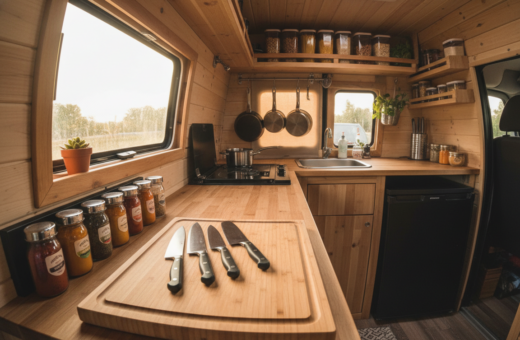
Decide early whether a galley or side setup fits the available space. Plan for a stainless steel sink next to a faucet and a small fridge to keep the workflow logical.
Include a well-sized cabinet and a spice rack to maximize storage. A wood countertop adds warmth while remaining durable for daily use.
Ventilation Requirements
Proper ventilation is a must when using propane for cooking meals inside a small area. Install vents or a low-profile fan and route propane lines with certified fittings.
“Good airflow and safe lines are essential to making any mobile food area both usable and safe.”
- Balance cabinet space with counter length.
- Plan water and propane systems early to estimate cost and time for the build.
- Choose quality materials like wood and steel for longevity on trips.
Selecting Durable Materials for Your Countertop
A well-chosen countertop material stands up to road wear and simplifies daily meal prep. For a small van build, choices should balance form and function.
Wood or laminate tops offer warmth and practical maintenance. They resist stains when sealed and are forgiving under regular use. Many builders prefer these surfaces for a mobile kitchen because they restore and sand easily if nicked.
Stainless steel is another strong option. This steel surface is non-porous and wipes down quickly, making it ideal where spills happen often.
Mounting matters: secure the countertop to cabinets with through-bolts and vibration-resistant fasteners. This prevents movement and protects joints during long drives.
- Pick high-quality wood or laminate to keep the workspace durable.
- Consider stainless steel for a hygienic, low-porosity surface.
- Ensure strong mechanical attachment to cabinets for travel stability.
Optimizing Your Coffee Station Setup
Smart placement of brewing tools turns a limited food prep zone into a reliable coffee system. This helps reduce clutter and keeps the most used items within reach during morning routines.
Coffee Brewing Essentials
Select compact gear that saves storage and counters space. The Magma Nesting Induction Stainless Steel Cookware nests neatly and frees cabinet room for mugs and utensils.
A Dometic portable stove provides a safe way to boil water for coffee when the onboard stove or propane is not ideal. Pair it with a small dedicated faucet and sink to speed washups and maintain hygiene.
- Keep mugs and steepers on a small rack to avoid spills and save floor space.
- Store pots and utensils in one cabinet so the van kitchen stays organized.
- Use collapsible containers to maximize storage and reduce build cost and time.
Focus on durable materials and quality design so the setup withstands travel and daily use. With the right system, coffee prep becomes a quick part of van life and supports more relaxed mornings and reliable meals on the road.
Choosing the Right Cooking Appliances
Appliance choice has a direct impact on efficiency, safety, and the variety of meals you can prepare while traveling. Selecting gear that matches your power budget and space turns a small work area into a reliable meal station.
Induction vs Propane
Induction stoves deliver fast heat and low waste when the electrical system supports them. They suit users who value precision and quick cleanup.
Propane remains popular for outdoor grilling and some onboard setups, but it needs strict ventilation and safe handling.
Air Fryer Benefits
An air fryer expands meal options without a full oven. The Instant Pot Vortex Mini (2-quart) is ideal for a compact setup and helps prepare healthier food with minimal oil.
Pressure Cooker Efficiency
Pressure cookers cut cook time and fuel use. They excel at rice, beans, and soups and suit travelers who want hearty meals fast.
“A Dometic portable stove’s automatic shut-off adds a layer of safety when cooking inside a mobile space.”
- Tip: match appliance weight and size to storage and the fridge placement.
- Maintain stoves and tools regularly for longevity and safety.
- Organize appliances so the campervan kitchen stays functional on the road.
Implementing Smart Storage Solutions
Smart storage transforms a compact food prep area into a highly functional living space. It helps the traveler find tools fast and keeps items secure while driving.
A dedicated spice rack mounted near the prep zone keeps seasonings visible and contained. A small, labeled rack prevents jars from rolling and cuts prep time.
Use the under-counter area for a fridge or a pull-out pantry to use every inch of space. Slide-out drawers give full access without unpacking the whole shelf.
- Design each cabinet to hold a specific set of items so things stay put on rough roads.
- Install modular shelving or add dividers to improve accessibility and reduce clutter.
- Choose secure fasteners and latches to keep drawers closed during travel.
With thoughtful layout and durable organizers, a van kitchen feels larger and works better. Small choices in storage make daily routines smoother and more reliable.
Managing Water and Sink Systems
A dependable water system keeps daily routines running smoothly in a small mobile kitchen setup. Good routing and reliable components reduce downtime and protect sensitive gear on the road.
Faucet and Plumbing Maintenance
Install a sturdy sink and pump where they are easy to reach for service. Regular checks of fittings and lines stop leaks before they reach wiring or the fridge.
A deep sink and a quality faucet make washing dishes faster and more sanitary. They also give space to rinse pots and keep the small kitchen tidy during travel.
- Place tanks and the pump so replacements are simple.
- Use flexible hoses with crimped clamps to limit failures.
- Fit a shutoff valve to isolate the water system for repairs.
With routine maintenance, the sink area supports cooking and cleaning without stress. For those in a van or a camper van, thoughtful plumbing saves time and prevents costly damage.
Benefits of an Outdoor Kitchen Layout
Pull-out stoves unlock extra prep surface and let aromas stay outdoors where they belong. This layout gives people more usable space and natural light for cooking and serving meals.
Using sturdy locking slides rated for at least 250lbs keeps the slide-out stove steady and safe during meal prep. It also protects gear when deployed on uneven ground.
Designers should plan the water and sink routing so the outdoor setup matches indoor function. A well-placed sink and secure fittings make dishwashing and coffee prep reliable at any campsite.
Keeping grease and moisture outside preserves the interior finish and reduces maintenance costs. For many in van life, outdoor cooking is ideal for social meals by a lake or under the stars.
- Choose lightweight materials and simple deploy mechanisms for fast setup.
- Consider cost versus value; an outdoor build often pays back in usability.
- Integrate the outdoor module into your overall van kitchen design for flexibility.
For more campervan kitchen ideas and practical design tips, see campervan kitchen ideas.
Maintaining Hygiene in Small Spaces
A compact hygiene routine keeps small living quarters safe and ready for cooking. They should wipe surfaces after each meal to stop crumbs and spills from building up. Quick action prevents stains and pests in a tight space.
Use eco-friendly soap and a soft scrub to protect plumbing and the water system. Quick-drying towels reduce moisture and cut down the chance of mildew. These choices also lessen environmental impact on the road.
Store food in sealed containers and label items by date. Proper storage limits odors and keeps rodents away. A tidy cabinet system makes meal prep faster and safer for van life or a campervan.
“Wipe counters and rinse the sink after cooking; a small habit that yields big results.”
For detailed routines and tips on van life hygiene, see van life hygiene. Prioritizing these habits keeps the kitchen area healthy and the overall space comfortable for travel.
Essential Cleaning Tools for the Road
Well-chosen tools reduce the time spent on washing dishes and surface care while traveling. A compact kit keeps the prep zone ready for coffee and meals without added hassle.
Microfiber Towel Benefits
Microfiber towels dry dishes fast and polish stainless steel surfaces without streaks. They trap grit so counters and the stove stay scratch-free.
Eco-Friendly Soap
Choose a biodegradable soap to protect the environment when grey water drains away. A concentrated formula saves space and reduces waste on the road.
- Dish brush with a soap-in-handle saves time and keeps the setup tidy.
- Small scrub pads for stubborn spots on the sink and stove.
- Silicone drying mats that fold for storage in a van kitchen or campervan kitchen.
- A compact spray bottle for quick faucet and counter touch-ups.
Investing in quality tools ensures the van kitchen and dishes stay hygienic throughout the trip. With the right kit, van life chores take minutes, not hours.
Organizing Utensils and Dinnerware
A compact utensil system keeps a dedicated cabinet organized and easy to navigate. Group plates, bowls, and flatware so each item has a fixed place. This method speeds the morning routine for coffee or meals.
Use dividers and non-slip liners in drawers to keep silverware and tools from shifting while driving. A single labeled bin for frequently used items saves seconds on setup and reduces clutter in tight space.
Choose durable dinnerware that resists chips and feels like home. Ceramic or melamine offers a better dining experience than thin plastic and holds up over time in a van or camper.
- Designate one cabinet for plates and cups to free the sink area.
- Install drawer dividers to secure utensils on rough roads.
- Store coffee gear near the prep zone for quick access.
Thoughtful storage planning makes the kitchen more usable and the living space calmer. With clear zones, travelers find what they need fast and keep the sink area ready for use at any moment.
Safety Protocols for Propane and Cooking
Safety checks start with reliable detectors and clear rules before any fuel is opened in a mobile living space. Policies and routine checks protect occupants and gear when using a stove in a compact kitchen.
Carbon Monoxide Safety
A carbon monoxide detector is mandatory when cooking with propane in a van. Install a certified alarm near sleeping areas and test it monthly.
Never leave a stove unattended while it is burning. Always create airflow by opening vents or doors when cooking. These steps reduce the chance of dangerous gas buildup.
- Inspect lines and fittings regularly for signs of wear or leaks around the propane connection and sink plumbing.
- Turn off the gas supply at the tank when the stove is not in use to prevent accidental release.
- Practice safe habits: keep flammables away from burners and have a fire extinguisher within reach.
“Proper habits and working detectors let people enjoy cooking with confidence.”
Budgeting for Your Kitchen Build
A realistic budget starts by listing materials, labor, and appliance costs before any cuts or shelves are ordered. This gives people a clear view of total cost and prevents surprise expenses during the build.
Start by researching prices for wood, steel, and fittings. Include the price of a sink, faucet, countertop, and a fridge. Add estimates for a stove and any propane work if that is part of the setup.
Use planning tools like SketchUp to map cabinet placement and estimate material quantities. Visual layouts help refine the design and save time once work begins.
Consider professional help. Rover Vans in California offers van conversions and can quote labor so people can compare DIY versus hire costs. Quality materials may raise upfront cost but reduce repairs later.
- Plan major items first: fridge, sink, and power system.
- Budget for tools, fittings, and unexpected work on the floor or wiring.
- Source parts online and prioritize the water system to save money.
“A clear budget and thoughtful design make the build process faster and the result more like home.”
Modular Furniture for Flexible Spaces
A bolted modular system turns a small mobile space into a configurable work area.
TNTvans builds aluminum-framed modules with thick sections and redundant bracing. These units bolt to the floor and form a stiff, durable platform that handles road forces.
Modular furniture lets users change a kitchen layout as needs evolve. Units can be removed, swapped, or reoriented to add more storage or to fit different appliances.
The design also supports upgrades without a full rebuild. By reusing the same frame, owners save time and money when they add a fridge, stove, or a new sink.
- Durable: thick aluminum resists fatigue from vibration.
- Flexible: bolt-on modules simplify reconfiguration.
- Practical: removable units make maintenance and upgrades straightforward.
Investing in modular furniture is a smart choice for anyone who wants a robust, adaptable kitchen system that fits changing travel needs and supports camper life.
Managing Food Storage and Waste
A deliberate approach to food storage cuts waste and preserves limited space in a mobile build. Small, repeatable habits make a big difference for day-to-day living and long trips.
Collapsible Storage Options
Collapsible containers free up counter area and cabinet space when they are not in use. They fold flat after meals and slide into a drawer by the sink or under the stove.
Airtight bags keep leftovers fresh and let the fridge hold more without bulk. Use resealable bags for pre-measured ingredients and label them with dates to reduce spoilage.
Limit the number of pots and utensils to those needed most. Fewer items mean less water for washing and faster turnaround after cooking.
- Organize the fridge with clear bins so items are visible and useable.
- Maintain a small, dedicated bin for trash and another for recyclables to control odors.
- Keep a cutlery roll or compact tray for utensils so they don’t shift while driving.
- Plan meals to reduce leftover waste and lower daily water use for dishwashing.
“A simple waste and storage plan keeps a mobile cooking area functional and hygienic.”
With these systems, the camper van or camper stays tidy and efficient. Good habits around storage, the fridge, and waste ensure meals stay fresh and the limited space works harder over time.
Professional Installation Services
Professional teams translate a client’s design into a safe, fully anchored system. Certified installers fasten modules to the van floor with the correct brackets and fasteners. This prevents movement and reduces wear during travel.
They handle complex requirements such as weight distribution, wiring routing, and plumbing penetrations. An expert approach keeps the original design intact and meets relevant safety codes.
Although hiring pros increases the initial cost, it often saves time and avoids costly repairs later. The extra expense buys peace of mind that the build will last for years.
Many companies offer remote installation support, step-by-step guides, or on-site service for vans and modular assemblies. These options let owners achieve a professional-grade system even when they do part of the work themselves.
“Choosing authorized installers ensures every attachment meets manufacturer specs.”
- Safe mounting: certified teams secure cabinetry and appliances to the floor.
- Design compliance: experts adapt plans to meet regulations and real-world constraints.
- Long-term value: professional installs protect the build and reduce future repairs.
Conclusion
A well-planned mobile food area turns daily routines into reliable rituals on the road. Thoughtful choices in materials and layout save time and reduce stress during travel life.
By focusing on durable finishes, smart storage, and efficient appliances, travelers can build a functional and attractive system for van life or a campervan. These ideas support safer, more streamlined cooking and upkeep.
Whether brewing morning coffee or preparing larger meals, a well-designed setup gives back hours each week. Prioritize safety and hygiene so every meal feels welcoming and the experience of cooking on the move stays rewarding.