After nearly a decade on the road, the author learned that overflowing cabinets and too many things only slow a journey down. They started in a Sprinter and now travels full-time with family in a Rossmonster truck, refining gear to what really gets used.
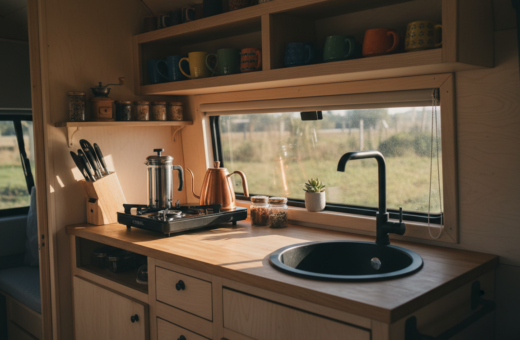
Living life on the move requires a short list of essentials so the small cooking space stays functional and pleasant. Every inch of space counts when meals, a stove, and food prep share room with daily life.
The goal is simple: reduce clutter, save time, and enjoy travel more. A well-organized kitchen becomes the foundation of a mobile home and makes routine tasks easier.
For a practical starting point and suggested gear, see this van life essentials guide that matches the minimalist approach the author recommends.
Understanding the Role of a Van Kitchen
A compact cooking area often sets the tone for how life on the road runs each day. Its design dictates how much water and power the vehicle needs and how smoothly daily tasks flow.
Function beats excess in a small mobile home. Thoughtful layout keeps supplies within reach and reduces clutter. That helps families or solo travelers move with less stress and more ease.
Practical planning also protects resources. A smart water plan pairs with storage choices to limit waste and lower refill frequency. Power demands drop when appliances and storage are arranged logically.
Beyond cooking, this space supports meal prep, cleaning, and food storage. Investing time in layout turns a tight area into a reliable home base for long-term life on the road.
- Flow: Design governs movement and daily routines.
- Resources: Water and power planning hinge on layout.
- Longevity: A functional setup makes full-time life sustainable.
Must Have Camper Van Kitchen Features for Daily Cooking
A compact cooking setup defines how easy meal prep feels on the road. A clear choice between induction and propane changes power demands, cook speed, and daily routine.
Induction stoves run clean and use battery power efficiently when paired with an inverter and good battery bank. Propane gives fast, reliable heat without drawing electrons, but it adds fuel management and ventilation concerns.
Portable cooking stations
The GCI Outdoor Slim-Fold Cook Station offers a lot of counter space and folds flat for storage. Many people use a portable station to expand prep areas during long days on the road.
- Counter space: A dedicated side counter makes cooking and plating easier for everyone.
- Power planning: Stove choice dictates how much battery or fuel is needed for daily use.
- Design tip: Combine a folding station with a compact stove to save storage space and time.
Years of testing show that the right tools and a small, well-thought layout let people prepare delicious meals while keeping their mobile home organized and efficient.
Selecting the Right Stove and Heating Options
Picking a stove means weighing portability, power draw, and practical safety. Choices range from induction to propane or small canister models. Each option changes how the kitchen performs and how often systems need attention.
The Duxtop Built-In Induction Cooktop is popular for those with robust battery systems. It cooks efficiently and saves space in a compact setup.
- Induction: Low heat waste, needs a strong battery and inverter.
- Propane: Reliable heat outdoors or indoors with strict ventilation and a carbon monoxide detector.
- Portable canister stoves: Easy to move outside to expand living and cooking options on hot days.
An oven adds baking ability but demands extra power and thoughtful layout planning. Check appliance wattage before buying to confirm compatibility with the van electrical system and kitchen plan.
Essential Cookware for Compact Spaces
Good cookware shrinks to fit a small space without shrinking meal options. In a tight kitchen, choices for pots, pans, and plates shape daily routines and save time.
Nesting Cookware Sets
The Magma Induction Non-Stick set stands out because it nests and uses removable handles. That design stacks pots and pans to free room in cupboards or a drawer.
Durable Plates and Bowls
Hydro Flask stainless steel bowls and plates are light and tough. They hold soups or pasta and clean quickly, which cuts water use during washing dishes.
Versatile Utensils
Pick utensils that fold or serve multiple tasks. A small set of good tools replaces a lot of single-use things and keeps the cooking area orderly.
- Choose pots and pans by the number of people to match size and weight needs.
- One well-organized drawer prevents clatter while driving and saves time at meal prep.
- Fewer high-quality items let people cook a variety of meals without cluttering the home on the road.
Maximizing Counter Space and Prep Areas
Extra prep surface can turn a tight layout into a flexible cooking workspace. Small adjustments to counters and storage change how quickly meals come together and how much effort goes into each step.
Countertop extensions attach or fold away to add usable surface when preparing food. A slim drop-leaf or pull-out panel gives more counter space without blocking passage when folded down.
Inlaid cutting boards over the sink are a clever trick for cutting and rinsing in one spot. This saves room for pans and pots on the main counter and speeds up prep.
A dedicated drawer for pots and pans keeps tools organized and within reach. Keeping a cutting board in that drawer ensures it is easy to find during busy meal prep.
Many travelers use their stove as temporary counter space when it is off, using a protective cover or mat to prevent scratches. A well-placed extension makes complex meals easier and keeps the main counter clear for plating and serving.
- Tip: Choose extensions that lock securely for safe use while cooking.
- Tip: Integrate a board over the sink to maximize prep without permanent changes.
Smart Food Storage Solutions
Smart storage turns a tight galley into a calm, usable zone for daily meals. Compact choices protect provisions and free up counter space for prep.
Reusable silicone Stasher Bags are ideal for snacks, leftovers, and reheating in boiling water. They replace single-use plastics and fold flat for storage.
The simplehuman Compost Caddy secures behind the sink with Velcro and keeps scraps out of sight. Tucking a small caddy near the sink reduces odors and makes composting easier on the road.
Good containers are airtight and stackable. They stop spills during travel and keep food fresh longer.
- Use vertical shelving to save floor and counter room.
- Reserve a dedicated side area for dry staples and easy access.
- Choose containers that nest or stack to maximize oven-to-cupboard flow.
“A tidy food system simplifies daily meals and reduces waste.”
These small changes protect supplies, cut clutter, and make cooking more reliable in a van lifestyle.
Coffee and Tea Rituals on the Road
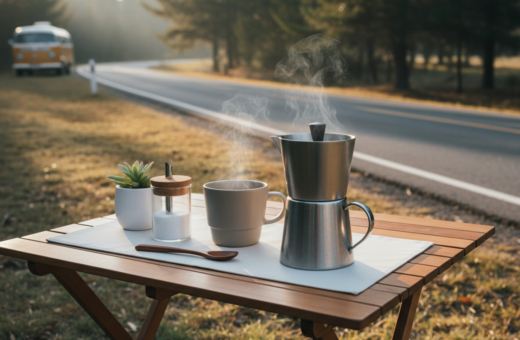
A warm brew each morning anchors routines on the road and signals the start of a new day.
Small rituals turn a tight kitchen into a comforting nook. They save time, reduce fuss, and add normalcy to life while traveling.
Travel Coffee Presses
Compact equipment keeps hot drinks simple and reliable. The AeroPress Go is popular because it packs small, brews fast, and needs little water to clean.
- Routine: A quick press cuts prep time and lets people enjoy coffee without elaborate setup.
- Durability: The Yeti Rambler tumbler keeps heat and prevents spills on bumpy road stretches.
- Space savings: A single travel press and a spill-proof mug free cupboard space for other essentials.
- Comfort: Investing in good gear is a small luxury that improves daily life on the move.
In short, a simple coffee setup lets travelers savor morning moments and keeps their small living area functional and pleasant.
Keeping Your Kitchen Clean and Sustainable
Simple cleaning habits stretch water, cut odors, and keep the living space usable. A focused approach saves supplies, reduces waste, and makes cooking more pleasant while on the road.
Eco-Friendly Cleaning Supplies
Choose plant-based cleaners and low-impact soaps to protect rivers and campsites. Brands like Attitude offer biodegradables that are safe for a small home and the outdoors.
Pack a few multi-use items: a concentrated dish soap, a microfiber cloth, and a small scrub brush. The Kula Cloth is a handy, antimicrobial option for quick wipes after cooking and washing dishes.
Greywater Management
Manage greywater with a compact plan. The Guzzle H2O Stealth Flex fits under the sink to filter drinking water, and a Sea to Summit folding bucket works well for collecting rinse water when a built-in tank is absent.
- Follow Leave No Trace: scatter greywater where it won’t pool.
- Use a collapsible bucket for brief dish runs and to save space.
- Consider a portable composting toilet like the CompoCloset Cuddy Lite to reduce liquid waste and odors.
“Prioritizing sustainability keeps natural places pristine and your home healthier.”
Safety Gear for Your Cooking Setup
Cooking safely on the road starts with clear, visible safety choices around your stove. A compact safety plan keeps everyone protected and reduces stress during meal prep.
Essential devices include a reliable carbon monoxide detector. The Kidde Carbon Monoxide Detector checks air quality frequently and updates every 15 seconds to alert occupants to dangerous levels.
Preparedness means more than one device. Keep a quality fire extinguisher within arm’s reach of the main prep area. Check it periodically to ensure pressure and seals remain intact.
- Safety gear is vital when using a propane stove inside a small living space.
- Ventilation, such as a roof fan or a cracked window, reduces gas buildup and fumes.
- Regularly inspect the stove and fuel lines for leaks or wear to prevent accidents.
- Invest in durable detectors and extinguishers for long-term peace of mind.
- Test the whole setup on a schedule so alarms and devices work when needed.
“Good safety gear lets people focus on cooking and travel with confidence.”
Essential Kitchen Organization and Storage
Good organization turns tight spaces into reliable places for daily meals. A short list of essentials reduces clutter and speeds routines for people living on the road.
Packing cubes and clear bins keep dry food visible and protected. Storing staples in airtight containers prevents spills and helps track supplies while travel continues.
A dedicated drawer for utensils, pots, and pans makes cooking faster. Label shelves and stack bowls so a single glance shows what is left. A cutting board that doubles as a serving tray frees countertop room and adds useful versatility to the design.
Small items tuck into drawers or magnetic hooks near the sink to save space. Machine-washable gear like a Rumpl blanket and quick-dry Nomadix towels add comfort without bulk and work for spills or drying dishes.
- List: Keep a short packing list of kitchen essentials to avoid overpacking.
- Size: Choose containers sized to fit cabinetry and drawer space.
- Tips: Use clear storage and magnetic solutions for easy access.
“A tidy system turns limited room into a calm, usable home.”
Useful Memberships for Finding Food and Campsites
Membership programs unlock access to curated places to park, refill, and explore while on the road. These services cut planning time and point travelers to vetted stops across the United States.
iOverlander is an invaluable community map for locating free campsites, water fill stations, and service points. It helps users track real-time reports from other travelers.
Harvest Hosts connects members with wineries, farms, and private properties. Those stops often lead to fresh local food and unique overnight settings.
- AllTrails+ reveals nearby hiking trails and park details so people can plan active breaks between drives.
- An America the Beautiful National Park Pass saves on entrance fees for frequent park visitors and simplifies multi-park trips.
- These memberships reduce search time, lower costs, and reveal off-grid gems that guidebooks miss.
“Many travelers find membership access pays for itself in convenience and unique experiences.”
Tips for Managing Power and Water Usage
Saving amps and gallons turns limited systems into reliable tools for daily meals.
Design the kitchen around energy-efficient choices. Use low-draw appliances, plan cooking times for peak sun when solar panels recharge, and limit oven use to batch cooking that reduces run-time.
Conserve water at the sink by fitting a spray nozzle and rinsing dishes in one basin. They should scrape food into a compost caddy and use a small basin for soaping to cut rinse cycles.
Organize storage for pots, pans, utensils, and a cutting board so prep is quick and counter space stays clear. A tidy drawer or shelf saves time and reduces needless trips to the sink.
- Use a MoonShade awning to expand prep space and keep the area cool for coffee and cooking on hot days.
- Keep BioLite Luci solar lights for ambiance without extra battery drain.
- Carry Maxtrax and Lynx leveling blocks so reaching a flat, safe place on the road is easier.
- Adopt a minimalist setup to lower power use and simplify water routines.
“Mindful use of power and water makes living on the road sustainable and stress-free.”
Conclusion
A thoughtful setup grows from trial, trimming what’s unused and celebrating what works. This process turns a small cooking space into a reliable mobile home hub that fits daily needs and travel rhythms.
Focus on essentials and smart organization. Simple tools, stackable storage, and clear routines cut clutter and speed meal prep. Those choices free time for exploration and family moments.
,Stay pragmatic and sustainable. Pack what helps, protect natural spaces with low-impact cleaning and greywater care, and adjust gear as habits change. Over time the setup will match the lifestyle—whether a gourmet cook or a minimalist traveler—making full-time life on the road calmer and more enjoyable.