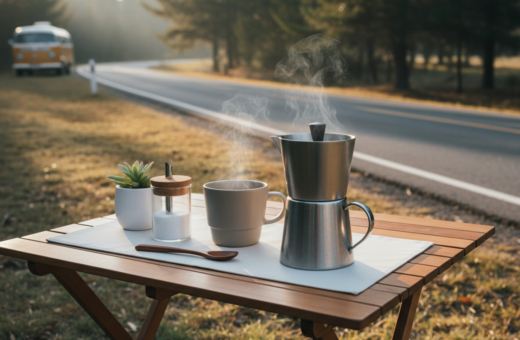
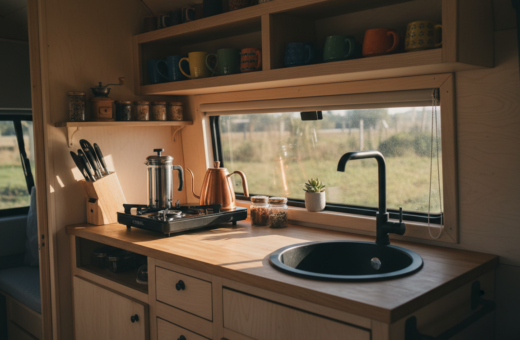
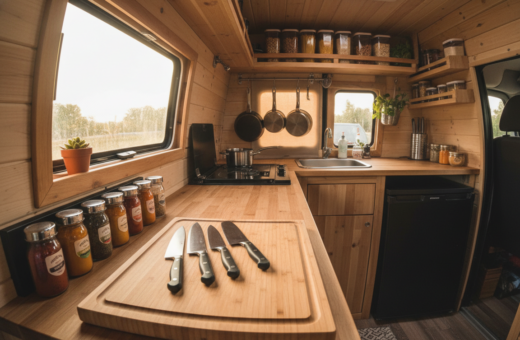
They learned that a compact coffee bar at home or on the road makes mornings predictable and calm. A tidy coffee station helped many travelers keep a steady routine, even when routines shifted. This short guide explains smart options that fit tight spaces and active schedules.
In a small kitchen, minimal design ideas gave priority to function and a clean look. Placing a coffee station near an outlet and clear counter space makes prep fast. A dedicated cabinet for an espresso machine kept gear safe during travel and made mugs easy to reach.
Professional travelers treated the setup as one of the key things to manage for less stress. A savvy coffee bar can turn a cramped room into functional space that supports a smooth day. Simple choices and consistent placement proved most useful on the move.
Understanding the Best Place for Coffee Station in Van
Choosing where to set up a mobile brew area starts with mapping how they use the space each morning. They should note where most kitchen prep happens and how much time they spend there.
The National Coffee Association’s 2024 report shows 83% of past-day drinkers brewed at home. This trend inspires mobile design ideas that mimic a home coffee bar while saving room.
A clever corner layout often wins. It uses unused area and keeps the main counter free. Placing the setup near a window also adds light and a pleasant view.
“They found the best place for coffee station in van by tracking morning flow and choosing a corner near an outlet.”
- Balance outlets, water access, and traffic.
- Pick multi-use furniture to save space.
- Choose a spot that feels like home without blocking other kitchen tasks.
Prioritizing Functionality and Proximity
Design choices that support quick access to water and waste transform a tiny brew corner into a dependable routine anchor.
Prioritize water access. Place the coffee station where filling reservoirs and rinsing gear takes seconds, not minutes. A nearby sink or plumbed line makes manual brewing faster and cleaner.
Proximity to Water Sources
Many compact conversions include a small sink next to the coffee bar to speed prep. This reduces trips across the kitchen and keeps counters drier.
Accessing Trash Bins
Experts in a 2024 analysis reported that closeness to a trash bin cuts cleanup time. Position waste access so grounds and wrappers go straight into the bin.
- Ensure the station allows easy reach to fresh water and waste disposal.
- Design the layout to support smooth movement from grind to brew to clean-up.
- Keep a dedicated drawer or container to house spent grounds and used filters.
“Proximity to utilities makes the brewing process as smooth as possible.”
For more placement guidance and technical tips, see this location and setup guide that adapts these ideas to mobile and home scenarios.
Utilizing Vertical Wall Space
Using vertical wall space turns idle surfaces into a compact, organized coffee area. This approach keeps counters clear and helps a small kitchen or mobile layout feel larger.
Install floating shelves to hold mugs, beans, and display items. Designers such as Marnie Oursler often recommend open shelving to combine storage with simple design.
A wall-mounted cart or rail system adds function without stealing floor room. These units let them hang tools, tuck a grinder, and keep filters handy.
- Shelves: store jars and mugs within reach.
- Cart: adds hidden storage and mobility.
- Rail systems: hang spoons, towels, and small gear.
When they plan the coffee bar layout, vertical shelving improves flow and daily use. A well-arranged wall makes the home brew corner tidy, efficient, and inviting.
Integrating Hidden Appliance Cabinets
Designing a concealed appliance space keeps counters clear without sacrificing brew-time convenience. A tucked-away setup gives a clean look while keeping the espresso machine ready at hand.
Hidden cabinets make a kitchen feel larger and more organized. They offer a dedicated home for the machine and other small appliances.
Ventilation Considerations
Proper airflow is essential. Heat buildup inside a closed cabinet can shorten the life of a coffee appliance.
- Leave side clearance near the espresso machine to allow air to circulate.
- Build cabinets deep enough so cords and drip trays fit without crowding.
- Install vents or a small fan to move warm air out when the unit runs.
“Many designers recommend leaving space on the side of your coffee machine for airflow.”
Smart design ideas hide appliances yet prioritize safety and access. With proper ventilation, a hidden coffee bar is both stylish and functional.
Maximizing Countertop Efficiency
Countertop layout drives how fast a morning brew routine moves, so every inch counts. A well-planned setup turns limited counter space into a functional coffee station that supports daily use.
Standard height matters: a home coffee bar should sit at about 36 inches. That counter height keeps brewing comfortable and reduces strain when handling heavy mugs or pitchers.
Keep the countertop clear of extras. Use a tray to group the most-used items—mug, grinder, and filters—so the surface stays tidy and ready.
Smart storage moves rarely used gear into nearby cabinets. This frees countertops for active tasks and keeps the coffee bar organized.
- Set the most-used items on the counter for quick reach.
- Group tools on a tray to simplify cleaning and prep.
- Store backups and bulk supplies in drawers or upper shelves.
“A clear countertop and a 36-inch counter height create a faster, more pleasant brewing routine.”
Selecting the Right Coffee Maker for Travel
Travel routines demand a coffee maker that balances size, durability, and brew quality. Choosing the right unit is the first step to build a mobile coffee station that fits a small kitchen or tight layout.
Manual Brewing Methods
Manual brewers like the French press or pour-over need little power and save space. They are durable and simple to clean, which suits frequent travelers.
Pros: light, reliable, and versatile when electricity is limited.
Compact Espresso Machines
Compact espresso machines bring café-quality shots without crowding the counter. Look for models with solid build quality and user-friendly maintenance.
Tip: select a machine that vents heat well and fits the available counter or shelf in a mobile kitchen.
Portable Grinder Options
A portable grinder is critical to fresh flavor. Manual hand grinders save power and pack small. Electric compact grinders offer speed while keeping footprint low.
Whether they choose a manual brewer or an espresso setup, the right maker and grinder form the heart of a reliable coffee bar on the road.
“A well-chosen coffee maker is the heart of your coffee station, providing the foundation for a perfect cup every morning.”
Essential Storage for Beans and Mugs
A tidy storage plan keeps beans fresh and mugs ready without adding clutter. Start with airtight canisters to protect beans and tea from light and air. Clear canisters help them see stock levels at a glance.
Store frequently used mugs on a mug tree or hang them on hooks inside a cabinet door. This saves counter space and makes a favorite cup easy to grab.
Label canisters for beans and tea to keep the coffee bar neat and professional. A small dedicated cabinet near the prep area keeps essentials together.
- Canisters: airtight, opaque or clear options to suit storage needs.
- Mug storage: trees or hooks to free shelf space.
- Access: keep daily essentials within arm’s reach.
“A tidy coffee bar with organized storage for mugs and beans is the hallmark of a functional kitchen space.”
Incorporating a Pull-Out Drawer System
A pull-out drawer turns a tight corner into an instant, organized brew zone. It uses the depth of a cabinet so they can hide gear yet keep it ready to use.
Deep drawers can hold an espresso machine and heavy jars without crowding the countertop. This keeps the coffee bar tidy and reduces lifting when they need to brew.
Designers often add custom inserts to keep grinders, tampers, and filters in place. These inserts save time and prevent clutter when drawers slide closed.
- Store heavy appliances in deep drawers to protect cabinets and ease access.
- Use slide stops and soft-close hardware to secure equipment when moving.
- Plan outlets and ventilation so an appliance can run safely while pulled out.
“A drawer-based coffee bar hides gear while making it simple to pull everything into use.”
Result: a compact, modern solution that improves storage, protects counters, and makes every morning routine smoother.
Leveraging Under-Cabinet Rail Systems
Under-cabinet rails unlock hidden storage without shrinking countertop space. They attach beneath wall cabinets and make use of an often overlooked zone.
Install hooks to hang mugs and espresso tools so items stay visible and tidy. This keeps the kitchen clear and cuts time during the morning rush.
Designers often recommend pairing a rail with open shelving. The combo creates layered storage that looks intentional and professional.
- Hang favorite mugs on hooks to display them and free shelf room.
- Store tampers, spoons, and small filters on the rail for quick use.
- Combine rails with a slim cart or shelves for added options and mobility.
“A rail-based coffee bar setup is a flexible, space-saving option that speeds routine prep.”
Result: a neat coffee station that maximizes storage and keeps essentials at hand.
Creating a Dedicated Coffee Nook
Carving out a nook under stairs or beside a cabinet creates a charming corner for quick daily brewing. This method gives a clear home for a compact coffee station and keeps counters free.
Start with a narrow counter and one open shelf on the wall. Keep the maker, mugs, and canisters within reach to speed each morning routine.
Designer Marnie Oursler suggests using under-stair space to carve a functional cabinet-like area. A slim rolling cart adds flexibility and can move the coffee bar to a different side of a room when needed.
- Add a small counter and open shelves for mugs and beans.
- Use a cart to make the coffee station portable and adaptable.
- Design the nook to reflect personal style with simple accents.
“A well-planned coffee nook provides a perfect home for your maker and daily essentials.”
For visual inspiration and layout ideas, see this coffee and beverage station roundup.
Choosing Durable Materials for Mobile Use
Selecting rugged surfaces turns a tiny brew area into a low-maintenance, travel-ready zone. Durable choices reduce repairs and keep a coffee station functional after long miles.
Start with a hardwearing backsplash. A tile backsplash resists stains and wipes clean after spills. It protects the wall behind the coffee bar and lifts the overall look of the kitchen.
Use sturdy cabinets and hardware that lock or latch. Quality cabinets handle vibration and secure a maker and accessories while moving.
- Moisture-resistant counters: easy to wipe and low upkeep.
- Impact-proof edges: protect surfaces from knocks on the road.
- Consistent style: match materials to keep the space cohesive.
Durable materials make long-term maintenance simpler and preserve design integrity. A well-built coffee bar will last and provide reliable service on every trip.
“A thoughtfully built coffee counter can survive daily vibration and still look polished.”
Managing Waste and Cleaning Supplies
Quick access to trash and cleaning tools makes a compact brew corner feel professional.
Keep a small bin in the corner of the coffee bar area to dump used grounds and tea bags fast. This cuts spills and saves time on cleanup.
Store towels and spoons in a dedicated drawer near the countertop or cabinet. Organizers recommend a close drawer so cloths and small utensils are always at hand.
- Use airtight canisters for beans and loose items to prevent spills and pests.
- Add a slim cart or shelf to hide cleaning supplies without blocking the corner.
- Design a simple routine: wipe the maker, empty grounds, and stow mugs each day.
A clear waste system keeps a coffee station tidy and reduces morning friction. When essentials are stored smartly, daily prep feels quicker and more pleasant.
“A well-planned coffee bar with an easy cleanup flow makes every cup fresher and routines smoother.”
Adding Personal Touches to Your Mobile Bar
They make a compact coffee station feel like home by adding small, intentional accents. Personal items create a calm morning routine even when travel changes the day.
Use color and texture. A colorful backsplash or a unique tile can give the coffee bar a distinct look. Choose a palette that complements the kitchen and reflects personal style.
Display favorites. Display a few cherished mugs or a small piece of art to add warmth. Designers recommend letting daily items act as decor so the space feels useful and loved.
Small touches—plants, a textured tray, or a framed photo—turn a compact station into a cozy corner. These ideas help a mobile coffee bar feel intentional without adding clutter.
“A well-planned coffee bar with personal touches is a great way to express your style while enjoying your favorite coffee.”
- Pick a cohesive color scheme to tie the area together.
- Showcase a handful of mugs to add charm and ease.
- Select a backsplash or tile that lasts and cleans easily.
Considering Power Requirements for Appliances
Understanding electrical needs is the first step to a dependable brewing setup. They should list every plug-in unit and note its running wattage before building a coffee station.
Ensure a coffee maker or an espresso machine matches the available circuit and inverter capacity. A small kitchen or tight space must account for startup surge and continuous draw.
Many professional builders recommend a high-quality inverter to run heavier gear safely. They often pair that with dedicated outlets and fuse protection to avoid overloads.
- Check wattage labels on each maker and appliance.
- Consider low-power options like a french press to save energy.
- Plan outlets so all brewing essentials plug in without extension cords.
“A safe and efficient power setup is the foundation of a great coffee bar.”
Result: thoughtful power planning keeps machines reliable and mornings smooth, whether the setup is mobile or anchored in a home kitchen.
Maintaining a Clutter-Free Environment
Assigning a spot to each tool and ingredient stops clutter before it grows. A clear plan helps the coffee station stay ready every morning. Small habits save time and reduce stress.
Twenty years of kitchen design experience shows that a neat bar speeds routine and protects countertops. They recommend thinking about how often each item gets use and placing it near the sink or prep side.
Experts suggest hidden cabinets for the espresso machine and bulky appliances. Keep the maker, mugs, and essentials in one cabinet or drawer so the countertop stays open.
“A well-planned coffee bar with a place for everything is the best home for your coffee gear.”
- Wall shelves or under-cabinet rails to hang mugs and spoons.
- Canisters for beans and tea to keep the look tidy.
- Deep drawers or a slim cart to hide a grinder and machine when not in use.
Design with a minimalist style to keep the area inviting. With clear storage and a single spot for each item, the kitchen area looks polished and functions smoothly every day.
Conclusion
Thoughtful layout and modest gear make morning routines simpler and more enjoyable. A compact bar can fit any small space and still feel intentional.
Creating a dedicated coffee bar enhances function and adds personal charm. Simple storage, clear access, and a clean flow help daily prep feel effortless.
Choose a reliable coffee maker and a matched maker routine to ensure consistent results. Small design choices shape how the area works each day.
Whether the aim is sleek modern or warm rustic style, a well-made bar blends convenience and comfort. Use these ideas to craft a coffee bar that makes every morning feel special.