Keeping a tiny mobile kitchen tidy is a real challenge. When cabinet room is minimal, every inch counts. This short guide shows practical ways to keep essential items secure and accessible while on the road.
Kathryn Bird, who spent 15 years living on a boat, notes that managing limited space requires clear rules and clever accessories. She says simple habits beat fancy gear when the square footage is tiny.
Readers will find compact ideas that help transform a campervan into a functional home on wheels. The guide covers proven methods to organize a kitchen, lock down items, and make the most of every cabinet and shelf.
Whether someone travels weekends or lives full time on the road, these tips reduce clutter and protect gear. Better order means less stress and more enjoyment while traveling.
Assessing Your Van Kitchen Needs
Track one week of cooking and coffee routines to reveal which items deserve cabinet space. This quick audit helps identify daily must-haves and excess things that only take up room.
Kathryn Bird learned from 15 years on a boat that habits matter more than gear. She advises listing what is used every day, then asking if each item truly adds value.
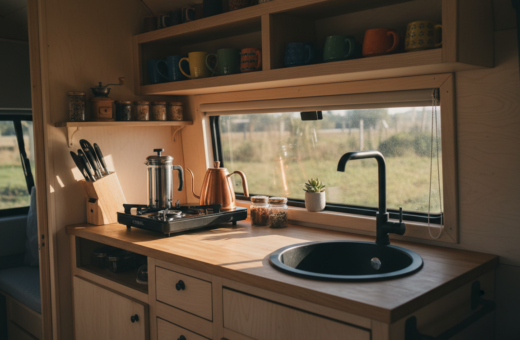
Start with simple questions: do you need a dedicated coffee maker, or can a small french press do? Would that space be better for shoes or emergency tools?
Practical tips help sort essentials from extras. Make three piles: keep, share, and leave behind. Limit nonessential things to create more room for what improves life on the road.
“Keep only the items you use most; everything else becomes clutter.”
- Prioritize daily tools tailored to your cooking style.
- Match items to the campervan kitchen footprint you actually have.
- Reassess after a month on the road to refine your selections.
Effective Van Kitchen Storage Solutions
Smart accessories and habits change how much can be kept on the road without sacrificing function. A few compact items make daily routines easier and reduce rattles while driving. Good gear and clear habits are the most reliable way to keep a camper organized.
Space-Saving Accessories
Nesting pots, collapsible bowls, and slim racks cut bulk and free shelf room. Small hooks and magnetic strips hold utensils and free drawer space. Nesting pieces are especially useful because they offer full use with minimal footprint.
- Use a compact rack for plates and a small drawer tray for cutlery.
- Keep coffee gear in a labeled container to speed morning routines.
- Try a pegboard or simple DIY hooks to hang mugs and ladles.
Organizing for Travel
Secure each item so things don’t shift on bumpy roads. Non-slip liners, Velcro, and simple bungee straps work well. A well-placed shelf or small pantry box helps group food and daily items.
Practical tips: pack frequently used tools within arm’s reach, weigh items to avoid overloading a cabinet, and rotate supplies after a few trips to refine what really gets used.
Choosing the Right Layout for Your Build
Layout decisions set how much usable room and access a build will provide for cooking and gear. Picking the right plan early helps avoid wasted time and costly changes later.
Rear Kitchen Layout
The rear layout frees interior space. It suits those who prefer to cook outdoors and often uses a slide-out drawer or a fold-down table.
Benefit: easy access to fresh air and less indoor mess.
Side Kitchen Layout
Side builds work well for full-time camper life. They typically allow room for a fridge, sink, and a dedicated pantry.
Tip: place the fridge near the doorway and store most-used items within arm’s reach.
Galley Kitchen Layout
Galley layouts fit larger conversions. Cabinets and drawers line both sides to maximize organized space.
Rover Vans’ modular units like the Kitchen Moon can be fitted into any of these footprints to boost storage and function.
- Measure carefully so there is enough room to move while cooking.
- Consider drawer and cabinet access when doors are open.
- Make sure the flow supports daily routines and the items you use most.
Benefits of an Outdoor Kitchen Setup
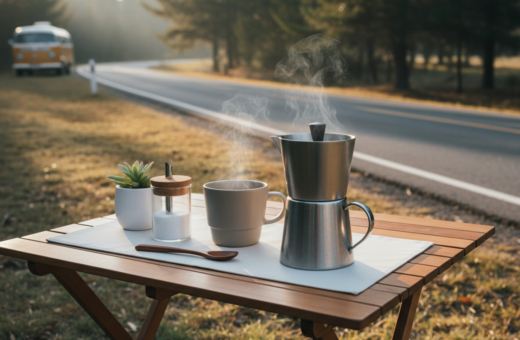
Moving the cook station outdoors is a practical way to expand usable room without a full rebuild. It keeps the small interior cleaner and reduces lingering food odors.
An outdoor kitchen is a smart way to free up indoor storage. A slide-out drawer or a compact prep table at the rear creates a dedicated work area for stove and pans.
Cooking outside also makes meals more pleasant. Fresh air and natural light improve the routine, especially in summer. Messy prep stays outside, which protects the living area.
A well-planned outdoor setup can include a sink and a small fridge, keeping essential items within easy reach. This approach lets a campervan carry fewer bulky supplies inside.
- Slide-out drawers give a neat place for a stove and prep table.
- Outdoor cooking prevents strong smells from filling the room.
- Secure all components firmly to avoid damage while driving.
“Cooking under the stars turns routine meals into part of the trip.”
Essential Nesting Cookware for Small Spaces
A well-chosen nesting set transforms a cluttered camper into a tidy, functional meal zone.
Nesting cookware saves up to half the available storage and cuts clutter in tight cabinets. These compact sets include pots, pans, and often a kettle sized to stack inside one another.
Selecting Durable Materials
Pick materials that clean easily and resist warping. Hard-anodized aluminum, stainless steel, and quality coated pans handle frequent heat and rough travel better than thin cookware.
Consider weight, durability, and maintenance. Lighter sets reduce fuel use while driving. Durable pieces cost more but last longer and lower overall cost per use.
- Check dimensions to confirm the set fits your designated shelf or cubby.
- Look for sets with lids that double as strainers or plates.
- Choose items rated for open flame if you plan to cook outside.
Result: better meal prep, less mess, and a more usable camper kitchen for coffee, snacks, and full dinners on the road.
Utilizing Under-Cabinet and Dead Space
Tiny gaps under cabinets often hide useful real estate that can be reclaimed with simple inserts. Pull-out baskets and shallow shelves make that narrow zone easy to access.
Install pull-out trays under a sink or inside a cabinet to keep items visible and tidy. These additions are perfect for items like spices, condiments, and small tools that otherwise slide to the back.
Many people use the low, unused area for extra cleaning supplies or non-perishable food. A labeled drawer or basket ensures everything has a place and reduces time spent searching.
Make sure to measure height and depth before buying organizers so they fit the exact dead space in a campervan.
- Prioritize frequently used items and place them nearest the front.
- Use pull-out baskets to create an easy-access drawer system.
- Keep heavier items low and secure them for travel.
“A well-organized under-cabinet area turns wasted gaps into reliable, everyday room.”
For more ideas that fit tight footprints, see RV kitchen ideas.
Keeping Items Secure with Non-Slip Matting
A well-placed sheet of grip mat is one of the simplest upgrades for a busy camper kitchen. It stops plates, glasses, and utensils from sliding when the road gets rough.
Line every drawer and shelf with a thin non-slip mat to make sure everything stays put. This inexpensive material cuts noise and prevents wear on fragile items.
Kathryn Bird calls this a top-secret trick for any camper kitchen. When you make sure everything is wrapped or cushioned, you reduce rattling and damage during travel.
- Cut the mat to fit drawers, shelves, and odd gaps for tailored protection.
- Use small pieces under cutting boards and tools to stop sliding during use.
- Check mats periodically to keep them clean and effective for long trips.
Secure items let travelers drive with confidence, knowing the shelf and drawers will hold as well as they did when packed. For more tips on how to keep gear safe, see secure storage.
Organizing Pantry Items with Plastic Containers
Clear, uniform containers turn a cluttered pantry into a tidy, easy-to-use area for food and coffee supplies. The JSCORES 40 PCS Food Storage Containers are a popular choice for camper use because they stack and seal well.
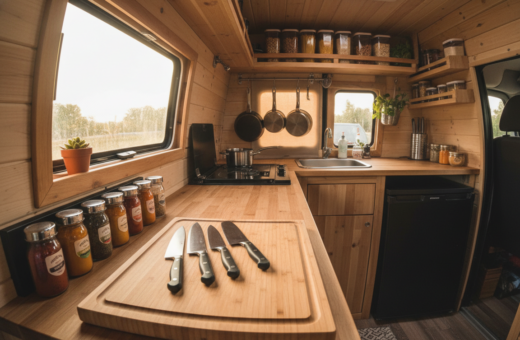
Decant dry goods like pasta, rice, and coffee into airtight tubs to prevent spills and pests. Uniform jars make it simple to see quantities at a glance and keep the camper kitchen neat.
Label each container so finding ingredients becomes fast, even on busy mornings. Stackable designs maximize space and create a predictable layout that saves time during meal prep.
- Choose clear, BPA-free containers to monitor contents easily.
- Use smaller jars for spices and larger ones for bulk items.
- Keep a few extra lids and labels on hand for refills.
Investing in high-quality, airtight storage containers pays off by extending shelf life and protecting pantry items while driving. This small change upgrades function and reduces waste on the road.
Creative Vertical Storage Ideas
Thinking upward is one of the simplest ways to expand a tiny camper’s usefulness. Vertical options reclaim space that would otherwise go unused and keep essentials within reach.
Over-door organizers hang on the inside of a cabinet door and hold items like cutting boards, foil, and plastic wrap. They free a shelf and make those slim items easy to find.
Using Over-Door Organizers
Install a slim rack or a set of hooks on a door back to tuck away utensils and lids. A small rail with S-hooks keeps most-used tools at hand without cluttering counters.
- Mount a narrow shelf for spices and small jars to use vertical wall space.
- Use clip-on holders for cutting boards and trays so they don’t slide to the back of a cabinet.
- Secure racks and hooks with strong anchors so they hold up to road vibration.
These tips work well for any van build and let the camper kitchen stay tidy. With a little planning, vertical choices transform tight corners into efficient spots for daily items.
Managing Kitchen Waste in a Tiny Space
A compact rubbish system prevents odors and keeps food prep areas clean on the road. A small, dedicated bin that is easy to access makes daily disposal quick and hygienic.
Many camper owners prefer a foldable bin that tucks into a cabinet or drawer when not in use. This keeps the limited space tidy and frees room for other items.
Use a lidded container for food scraps to stop smells and slow decay. Empty that container often and line the bin with biodegradable bags for faster cleaning and safer disposal.
Choose compact kitchen accessories designed to save space while offering practical function. Secure any bin so it won’t tip on the move and place it near meal prep to make use simple.
- Keep trash containment separate from dry food.
- Store the foldable bin in a low cabinet or a shallow drawer.
- Always dispose of waste at designated facilities to protect wild places.
A well-managed waste system is key to a successful campervan life. It keeps the camper pleasant and supports sustainable travel habits for every trip.
Drawer Organization and Separators
A tidy drawer system keeps everyday utensils within reach and prevents items from sliding around while driving. Modular dividers create a shelf-like layout inside narrow drawers so each item has a clear place.
Use rigid separators for cutlery, small tools, and batteries to stop movement. Small storage containers work well inside those compartments to further sort spices, clips, and other things.
Durable, easy-to-clean materials matter because drawers endure constant use. Removable inserts make cleaning simple and let owners reconfigure compartments for different trips.
- Place frequently used utensils near the front for fast access.
- Group similar items on one shelf-like row to reduce searching.
- Secure inserts with adhesive strips or low-profile fasteners to prevent shifting.
A well-organized drawer system is a hallmark of a professional campervan kitchen build. It saves time, cuts frustration, and makes the most of limited drawer space for a smoother routine on the road.
Budgeting for Your Kitchen Design
Estimating real-world costs up front keeps priorities clear during each phase of a build.
Start by listing must-have items and rank them. This helps decide where to spend and where to save.
Make sure to include the cost of materials like plywood, fasteners, and hardware for the van build. Add estimates for appliances and small fixtures too.
Many choose a DIY approach to cut labor expenses. Building units yourself can lower prices, but factor in tools and extra time.
Leave a contingency of about 10–15% for surprises. That small buffer prevents stalled projects and rushed compromises.
- Research prices to compare quality and long-term value.
- Prioritize durable components so replacements are rare.
- Track spending monthly to keep the plan on target.
Result: a thoughtful budget produces a compact, usable kitchen with the right balance of cost and quality for reliable life on the road.
Safety Guidelines for Cooking on the Road
Before lighting any flame, a routine safety check can prevent common travel accidents. This way of working keeps the living area calm and reduces risk while on the road.
Make sure everything is secured before driving. Check stove fastenings, utensils, and loose kitchen accessories so nothing becomes a hazard in motion.
Ventilation matters. Plan a place for cooking that stays clear of flammable items and allows fresh air flow. Test carbon monoxide detectors and inspect propane lines as part of a regular diy safety check.
- Use a reliable rack or hooks for utensils and small items so they do not become projectiles.
- Pick a level, safe table or spot to park before cooking; stay aware of surroundings.
- Practice checks often; testing detectors and fittings keeps repairs small and predictable.
“Simple, regular checks are the best defense against accidents on the road.”
These tips help people enjoy coffee and meals with peace of mind and let a thoughtful van build focus on freedom and comfort.
Conclusion
This guide shows how small changes in packing and a few smart purchases can transform how items are used and secured while traveling on the road. It offers practical ideas that suit different layouts and daily habits for a more orderly life in a compact build.
, If this post helped, please consider supporting future work via the affiliate links provided for recommended gear. Using these affiliate links helps fund more guides; the site may earn a small affiliate commission at no extra cost to readers.
All content was reviewed and last updated on 2026-05-22 to keep tips current. Thank you for reading and for any links clicked or purchases made—feedback and stories about your own van kitchen wins are welcome.