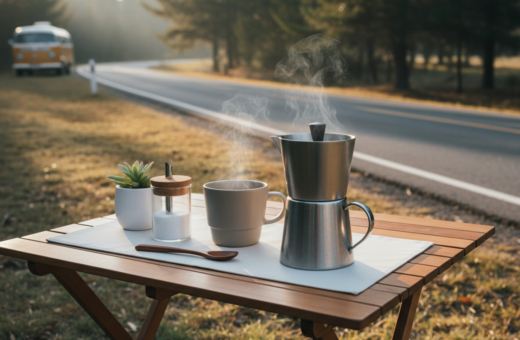
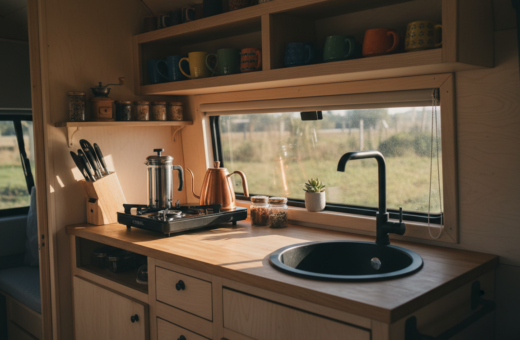
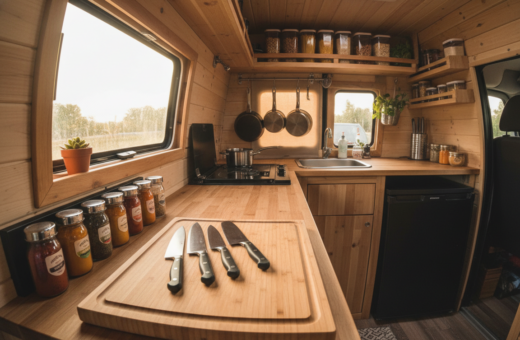
Designing a practical coffee area in a tight van demanded clear choices. Skip and Marlene Jennett relied on a drip pot from Lehman’s Non-electric Hardware in Kidron, Ohio, which proved how a simple pot can shape life on the road.
A bright morning routine mattered to many travelers. They weighed maker types, power needs, and the minutes they spent making coffee each day. Choosing a drip coffee maker or a percolator helped them save time and reduce clutter.
Good designs found a way to store cups and a cup coffee pot while keeping the living space open. The best ideas used gear that doubled as storage or prep space, so one item served a lot of functions.
By planning placement near the stove and power sources, they kept things tidy and ready for camping trips. That approach made it easier to enjoy a warm cup and a smooth start to the day without sacrificing space.
Assessing Your Small Camper Kitchen Coffee Setup Needs
Defining a morning routine narrows decisions and prevents needless gear from crowding space. Start by noting how many cups you drink, how much time you have, and whether you need electric power or a stove. This simple list steers choices toward gear that fits life on the road.
Defining Your Morning Ritual
Decide the one thing that makes your day start well. Some prefer drip coffee for ease. Others, like Brenda, lean on a Revere Ware stainless steel percolator to make a strong pot on a 2004 Lance 815 truck camper.
Evaluating Available Space
Measure counters, cabinets, and power access. A clear plan helps avoid buying a maker that takes up too much room.
- Count how many cups you need each day to save minutes.
- Match a coffee maker to your stove and power limits.
- Look for ideas that tuck a pot or cup into existing storage.
Managing Power Constraints for Brewing
Power choices shape how reliably you can make a morning brew on the road. High-draw appliances can drain batteries or overwhelm a solar array in minutes. Van owners must plan which device they will use before dawn and during the day.
Manual methods reduce strain on electrical systems. Bill Tex relied on an insulated Bodum French press to keep his coffee hot for an hour without using power. Many travelers prefer that reliable way because it needs no inverter or shore source.
When shore power is available, a standard coffee maker can speed the routine. Sally Stomberg used a Black & Decker that brewed 2.5 cups in minutes on shore power. Still, users must make sure their inverter can handle the load before they switch the brewer on.
- Check inverter rating: match the coffee pot or maker to the inverter.
- Balance loads: avoid using the brewer while the fridge or lights run.
- Plan brew times: schedule coffee use around charging or shore access to save power.
Stove-top percolators and manual pour-over ideas give a lot of flexibility for camping life. Those methods use a stove or no electricity at all, so people can still drink coffee and keep other systems running. With a clear plan, making a cup remains part of the morning routine even with limited power.
Selecting the Right Coffee Maker for Compact Spaces
Choosing the right brewer can change how mornings feel and how much space remains for other things. This short guide compares three practical types so readers can match flavor, power, and storage needs.
Stovetop Percolators
Percolators shine when heat comes from a stove. They make strong, consistent pots when users measure coffee grounds carefully.
Measure grounds to taste. Too much makes bitter brew; too little is weak. A metal percolator doubles as a boil pot for tea or hot water, which saves space and devices.
Manual Pour Over Methods
Pour-over devices use almost no power and pack flat. They work with simple filters to keep grounds inside and out of the cup.
They are ideal for those who want control and low power draw. Filters keep cleanup quick and the counter tidy. Many models fold or nest to tuck away near the sink.
Instant Coffee Options
Instant packets take minutes and occupy very little room. J. Bruce Baker, Jr. prefers Folgers Instant Packets because they are inexpensive and easy to store.
Instant is the fastest way to make a cup during a busy morning. For best taste, use hot water from a versatile pot or stove and stir well.
- Test different makers to find what keeps coffee hot and tastes right.
- Use coffee filters with a drip coffee maker to reduce sediment and cleanup time.
- Consider devices that serve multiple roles to save space and power.
For more ideas on compact brewing, see compact coffee solutions.
Essential Accessories for a Minimalist Coffee Bar
Streamlined coffee corners depend on a few reliable tools, not many gadgets. In practice, that means choosing durable items that pull double duty and store neatly.
Must Have Brewing Tools
A single, good coffee maker can replace several devices and free counter space. Bill and Sue Billyard relied on a Hamilton Beach Brew Station model 48274 that fits in their sink and keeps their routine simple.
Key extras include quality coffee filters, a sturdy pot that keeps coffee warm, and a glass carafe or tough cup for serving. A versatile brewer handles tea as well, so one tool covers both drinks.
- Reliable brewer: pick one maker that matches power and stove options.
- Storage solutions: stack filters and cups to keep counters clear.
- Multiuse items: a pot or carafe that doubles as a kettle saves space.
“We liked the Brew Station because it fit the sink and reduced clutter,”
Creative Storage Solutions for Limited Countertops
A few clever stashes let you keep brewing gear out of sight and ready to use.
Use the sink as temporary storage. When the maker is not in use, the sink becomes a protected spot to hold a coffee maker or French press. David Neumann relied on an REI marine-grade French press that fits neatly in that space.
Wall-mounted racks free counters by holding a coffee pot, mugs, and filters vertically. A stove-top percolator can sit on its burner when idle, which saves valuable prep area.
- Keep a dedicated drawer or cabinet for the maker to keep the surface uncluttered.
- Store a manual pot within easy reach if limited power is an issue.
- Use vertical racks for cups and accessories to open workspace for other tasks.
Protect gear while driving. Use padded holders or straps in cabinets to prevent damage. A tidy, organized kitchen makes brewing a cup faster and keeps routines smooth on the road.
Optimizing Your Workflow to Minimize Cleanup
Simple habits at brew time make post-brew chores faster and less messy. A clear routine reduces water use and keeps the living area fresh. Small changes in placement and method save minutes each morning.
Proximity to waste disposal matters. Keep the coffee pot and maker near the sink or a trash bin so used coffee grounds go straight into waste. That cuts trips across the space and lowers spills.
Streamlining water usage helps too. Boil only the water needed for one or two cups. Heat less water, use less power, and wash fewer items.
Practical tips
- Use disposable coffee filters to trap grounds inside the filter for easy discard.
- Consider instant coffee for the fastest cleanup—Buzz and Sherri Merchlewitz adopted it to cut chores while camping.
- Wipe the pot and maker immediately after use; a quick wipe takes minutes and prevents stains.
- Keep a small bin or compost bag near the sink to make sure grounds are disposed of promptly.
- Store a dedicated towel or sponge close to the brew area to speed drying and reuse.
“A well-planned workflow turns cleanup into a minute-long task,”
Design Tips for a Spacious Feel in Tight Quarters
Selecting transparent gear and clear lines helps a compact brew zone read as airy and calm. The One-All 8 cup Clear Stovetop Percolator from the Café Brew Collection used glass to keep sightlines open. That made the area feel less cluttered while still storing a reliable pot.
Simple moves created more visible space:
- Use glass containers and uniform jars for coffee grounds so surfaces look tidy and cohesive.
- Choose a pot that nests on the stove top when idle to free counters and save minutes during prep.
- Store instant coffee packets in a decorative box to avoid loose items on the counter.
Light colors, focused lighting, and minimalist ideas helped the station blend into the room. Every cup item earned a purpose so the area never felt like extra furniture.
For more ways to set coffee that feel intentional and neat, see creating a coffee bar.
Conclusion
Smart placement and a single reliable maker turned a cramped area into a calm ritual. It made a faster, neater morning possible and let travelers focus on the day ahead.
Thoughtful choices mattered more than many gadgets. By matching one brewer to power and storage, users kept counters clear and reduced tasks after brewing.
These design moves helped preserve space while delivering great coffee without fuss. With a simple plan and reliable gear, life on the road felt easier and more intentional, one warm cup at a time.